By the time Judge Thomas Hart returned to the bench, everyone in the Cedar County courthouse seemed to be holding the same breath. Caleb Walker stood between two deputies with his hands cuffed at his waist, his face hollow from weeks of confinement and too many nights without sleep. He had once worn the same badge as the men guarding him. Years before, people in Pine Hollow had trusted him to pull over drunk drivers on frozen back roads, break up fights outside the VFW, and knock on doors no one wanted opened.
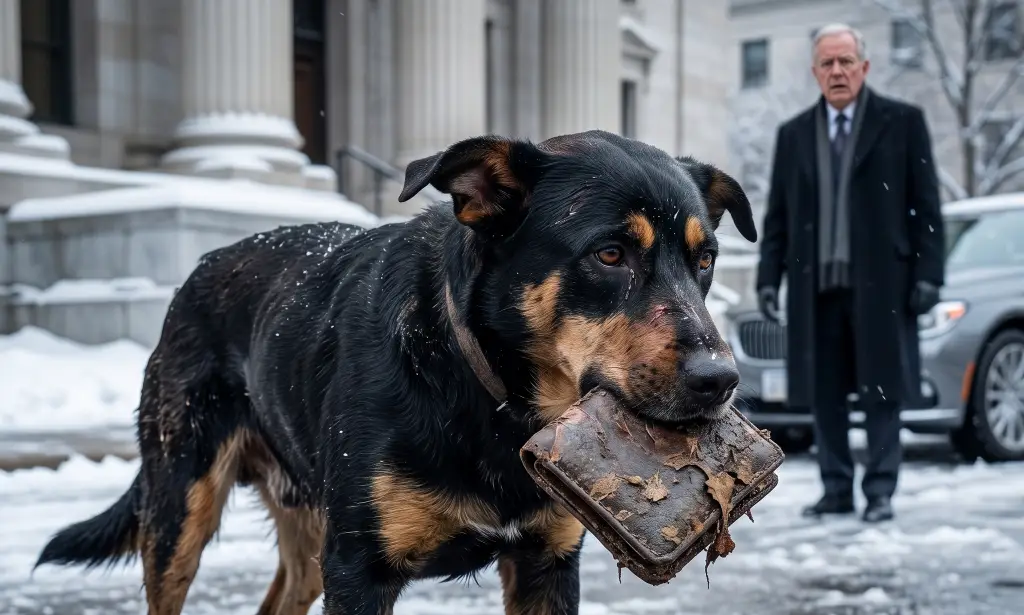
Now they stared at him as if they had never known him at all.
The jury had already found him guilty of capital murder. The prosecutor had called him possessive, dangerous, humiliated by rejection. The newspapers called him a disgraced former deputy. The people sitting behind Maddie Bennett’s parents called him worse under their breath.
“Caleb James Walker,” the judge said, his voice measured and cold from years of practice, “this court accepts the jury’s recommendation. You are hereby sentenced to death.”
A sound moved through the gallery, not quite a gasp, not quite relief. Maddie’s mother folded forward as if the words had taken the last strength out of her. Her father, Martin Bennett, sat rigid, both hands locked around the brim of his work cap, staring at Caleb with a grief so sharp it looked like hatred.
Caleb did not collapse. He did not shout. He only lowered his eyes for a moment, the way he used to do when a storm rolled in over the timberline and there was nothing to do but let it come.
Judge Hart looked down at him. “Do you have anything to say before you’re remanded?”
He looked past the judge, past the prosecutor, past the packed benches where old neighbors avoided his eyes. Then he spoke quietly.
“I’d like to see my dog.”
A few people shifted in their seats. Someone near the back let out a hard, bitter laugh before a bailiff turned his head. Martin Bennett’s jaw tightened.
Judge Hart stared at Caleb as if he had misheard him. “Your dog?”
“Yes, sir,” Caleb said. “Ranger. Just once.”
The judge’s mouth drew into a thin line. “That is your request?”
Caleb nodded.
For a moment, no one spoke. To most of the room, it sounded like a condemned man reaching for the only soft thing left in his life. A sentimental trick, maybe. A final performance from a man who had shown no believable remorse.
But Caleb was not thinking about performance. He was thinking about a black-and-tan shepherd mix with scarred ears, yellow eyes, and the stubborn soul of a creature that had never once believed the worst of him.
Ranger had been with him long before Maddie Bennett came back into his life. Caleb had found him years earlier behind the old feed store, all ribs and mud, snarling at anyone who came too close. He had taken the pup home, fed him from a chipped bowl, and let him sleep inside the first night because the temperature had dropped below zero.
After that, Ranger never truly left his side.
They lived together in a small weather-beaten house at the edge of Blackpine Woods, where the road narrowed, cell service died, and the wind dragged snow across the fields in long white sheets. Caleb had moved there after leaving the sheriff’s department, after too many wrecks, too many calls involving children, too many memories that did not stay buried when the uniform came off. He told people he liked the quiet. The truth was that silence asked less of him than people did.
Maddie had not been silent.
She was eighteen, restless, and bright in a way that made the whole town notice when she walked into a gas station or leaned over the counter at the diner where she worked weekends. Caleb had first known her as Martin Bennett’s daughter, a girl who used to wave at patrol cars and ask too many questions. Years later, after he left the department and she was no longer a child, they crossed paths again at a roadside accident where she had stopped to help before anyone else arrived.
Their relationship had grown in the awkward spaces between loneliness and need. Maddie wanted out of Pine Hollow. Caleb wanted a life that did not feel like punishment. She said he listened better than boys her age. He said she made the house feel less like a place where a man went to disappear.
Still, love had not made them simple.
Maddie hated how guarded Caleb was. Caleb hated how easily fear came to him when she talked about leaving town, moving west, starting over somewhere with lights and music and people who did not know her father’s name. Their arguments were not loud at first. They were small cuts, made through text messages, unfinished calls, and long silences in the kitchen while Ranger lay under the table watching them both.
The last messages became the heart of the state’s case.
You’ll never understand me, Maddie had written.
Caleb had answered too quickly, angry and scared in a way he regretted almost as soon as he hit send.
Don’t do this tonight. Don’t just walk out on me.
Then another message, worse because it sounded like a threat when read aloud by a prosecutor.
It won’t end well if you leave like this.
Caleb had meant the storm coming in. He had meant the road, the dark, the miles of timber and ditches between his house and town. But Maddie never replied, and by morning her phone was dead.
For two days, Caleb searched. He walked the tree line behind his property until his boots soaked through. He drove the county roads with Ranger in the passenger seat, stopping at pullouts, abandoned cabins, and the clearing where teenagers sometimes built bonfires. When he called the sheriff’s office, the deputy on duty heard panic in his voice and later testified that it sounded like guilt…
On the third day, two hunters found what was left of Maddie in Blackpine Woods.
The fire had done what fire does. It had tried to erase her.
DNA identified her. The medical examiner spoke in careful language. The sheriff’s department searched Caleb’s house, his truck, his shed, his gun cabinet. Reporters parked outside his driveway before the deputies finished bagging evidence.
Then they found the pistol.
It was half-buried in snow and wet leaves near the place where Maddie’s body had been discovered. The serial number traced back to Caleb, a sidearm he had kept after leaving law enforcement. He swore it had gone missing from his truck weeks earlier, but there was no report, no witness, no proof. His boot prints were in the woods because he had been there searching. His fingerprints were on old shell casings in a range bag because he owned the gun. His messages sounded angry because he had been angry.
Detective Daniel Reece built the case with the patient certainty of a man stacking bricks.
Maddie’s father gave the first push. He went to the sheriff’s office with a face gray from grief and told them Caleb had been controlling her. He said Maddie had wanted to break things off. He said his daughter had been afraid, though in the rawness of those days he no longer knew what she had told him and what his pain had filled in.
The prosecutor gave the jury a story they could understand. Older former deputy. Young girlfriend. Fight. Threat. Woods. Gun. Fire.
Caleb’s defense attorney tried to pull the pieces apart, but every reasonable doubt seemed to find its way back to Caleb’s door. No one could explain where Maddie had gone after the last text. No one could explain why Caleb’s gun was near her body. No one could explain why Ranger, usually steady and obedient, had spent the days after Maddie disappeared pacing the porch, whining at the woods, refusing food.
By the end of the trial, the county had already decided what the jury later confirmed.
Caleb Walker was a murderer.
Only Ranger had never accepted it.
The jail allowed the visit two days after sentencing, mostly because Judge Hart signed the order himself. It was not mercy exactly. It was procedure wrapped in a small concession, the kind that let the court believe it had remained humane after doing something irreversible.
The deputies brought Ranger through the side entrance just after dusk. He looked thinner than Caleb remembered, his coat rough from weeks without the man who brushed him every Sunday on the porch steps. One of the animal control officers held his leash with both hands, but Ranger pulled hard the moment he caught Caleb’s scent.
Caleb was waiting in a small interview room, chained to a metal ring bolted beneath the table. He heard the claws first, frantic against the polished floor. Then the door opened, and Ranger came in low and fast, dragging the officer half a step before the deputy released the leash.
The dog hit Caleb’s knees with a sound that broke something in him.
Caleb bent over as far as the chain allowed and buried both hands in Ranger’s fur. The dog pushed his head against Caleb’s chest, whining deep in his throat, his whole body trembling with the force of recognition. For the first time since the verdict, Caleb’s face changed. Not much, but enough for the deputy by the door to look away.
“Hey, boy,” Caleb whispered. His voice cracked on the second word. “I know. I know.”
Ranger licked his cuffed hands and nosed at the chain, confused by the metal, angry at the distance it forced between them. Caleb rubbed the scar behind his ear, the one Ranger had gotten as a pup before Caleb found him. He had touched that scar a thousand times without thinking. Now it felt like proof that some things survived being hurt.
The room smelled of bleach, wet fur, and old coffee. Outside the narrow window, the jail yard lights buzzed against falling snow. Caleb knew the visit would be short. He also knew he had no way to ask a dog for a miracle without sounding insane.
Still, Ranger had been in those woods. Ranger had smelled things no investigator could see. On the morning Caleb found Maddie missing, the dog had tried to pull him toward the north ridge, away from the official search grid. Caleb had followed him for half a mile until deputies called him back to answer questions. After the arrest, Ranger had been taken to a neighbor’s barn, and whatever he knew had been left inside him.
Caleb pressed his forehead to the dog’s. “Listen to me,” he said, though he knew Ranger understood tone more than words. “I didn’t hurt her. I didn’t hurt Maddie.”
Ranger grew still.
The deputy near the door shifted his weight. “Walker, you’ve got five minutes.”
Caleb kept one hand on the dog’s neck. “There was something out there, wasn’t there?” he whispered. “You knew. You tried to show me.”
Ranger’s ears rose. He turned his head toward the hallway, then back to Caleb, breathing hard.
“I can’t go,” Caleb said. “You can.”
The words were foolish. Desperate. Maybe cruel, asking loyalty to become evidence. But Ranger looked at him with those yellow eyes, steady and bright, and Caleb felt a flicker of the old bond between them, the one built from snowstorms, quiet mornings, and years of being each other’s only reliable company.
The officer reached for the leash. “Time’s up.”
Ranger backed away from him, not aggressively, but with sudden purpose. The officer leaned down again. Ranger slipped sideways, twisting out with a speed that startled everyone in the room. The leash snapped across the officer’s hand. A deputy cursed. The door had not fully latched behind another guard bringing paperwork through the hall.
Ranger saw the opening and took it.
He shot into the corridor, claws skidding, shoulders low. The deputies shouted. One lunged and missed. Caleb rose so sharply the chain jerked him back against the table, pain flashing through his wrists.
“Don’t hurt him!” he yelled.
But Ranger was already gone.
He burst through the service door into the sally port, past a delivery cart and a stunned kitchen worker, then through the outer gate as it rolled open for a county van. By the time the deputies reached the yard, he was a dark shape moving across the snow, fast and silent, headed toward the county road.
One deputy raised his radio. Another looked at Caleb through the glass with disgust.
Caleb did not sit down. He stood in the interview room with his cuffed hands clenched and his breath uneven, listening to the shouting fade.
For the first time since Maddie vanished, hope hurt more than fear.
Ranger ran through town as if the map had been burned into his body. Past the closed hardware store. Past the diner where Maddie had once slipped him bacon under the table while Caleb pretended not to see. Past the church parking lot, where a few people turned at the sight of a loose dog cutting across the street in the snow.
The storm thickened as he reached the county road. Cars slowed, headlights washing over him, but Ranger did not stop. He knew the way out of Pine Hollow. He knew the ditch where deer crossed, the bend where the asphalt broke, the stand of pines that marked the old logging road leading toward Caleb’s house.
By midnight, ice clung to the fur along his chest. Burrs caught in his tail. Twice he stopped to listen, lifting one paw from the frozen ground. Once, far off, coyotes yipped beyond the creek, and Ranger answered with a low growl before moving on.
He reached Caleb’s property near dawn, but he did not go to the porch.
The house was dark. A strip of police tape still clung to the side door, half torn loose by weather. Ranger circled once, nose close to the ground, catching old scents beneath the snow: Caleb, deputies, cardboard boxes, strangers, Maddie’s faint trace on the porch rail where she used to lean with coffee in her hands.
Then he turned toward the woods.
Blackpine was not one forest so much as a series of shadows: logging roads, deer trails, ravines, frozen creeks, and clearings where people went when they did not want to be seen. Caleb had known its edges. Ranger knew its secrets.
He crossed the creek at a shallow bend and climbed the north ridge, the same direction he had tried to pull Caleb weeks earlier. The snow held scent poorly, but beneath it were layers: oil, leather, gasoline, old smoke, fear. Ranger moved in broken lines, stopping, circling, doubling back. He found the place where deputies had trampled the ground near Maddie’s remains. He passed it.
Farther in, beyond the marked search area, the trees opened around an old hunting blind that had collapsed years before. Beer cans lay under the snow. There were tire marks frozen into mud beneath a crust of ice, made by something heavier than Caleb’s truck. A strip of black cloth fluttered from a thornbush.
Ranger nosed through the brush until he found the first object: a plastic bottle wedged under a fallen limb, sealed with a cap and coated in grime. Inside were small discarded items that carried the sharp, unmistakable scent of strangers. He pawed at it, whining, then left it where it lay.
A little farther on, beneath a mat of dead leaves near the roots of a pine, something hard and square caught against his claws. Ranger dug until his paws bled. He uncovered a cracked plastic case, the kind used for a camera card, and beside it a tiny black memory card no larger than a fingernail.
Ranger did not know what it was. He only knew the smell around it: Maddie, smoke, men, and the same cold wrongness that had made him pace the porch until his throat went raw.
He took the plastic case gently between his teeth.
By morning, Pine Hollow had begun waking to news that Caleb Walker’s dog had escaped from the jail. Some people joked bitterly that even the dog knew his owner was guilty. Others said nothing, because in a small town, grief makes people superstitious, and no one wanted to be the first to admit that the animal’s disappearance felt strange.
Judge Hart heard about it from a bailiff while walking into the courthouse with a paper cup of coffee and a leather briefcase under one arm. He frowned, annoyed at first. He had spent the night badly, though he would not have admitted it. Caleb’s request had stayed with him longer than he expected.
A dog. Not a mother, not a pastor, not a final speech. A dog.
Hart was halfway across the parking lot when a bark cracked through the cold.
Ranger stood beside the judge’s SUV, soaked, limping, and shaking with exhaustion. Mud streaked his legs. Snow clung to his whiskers. In his mouth was the cracked plastic case.
The judge stopped.
Ranger barked again, a harsh, urgent sound that made two deputies at the courthouse door turn around. When one of them started toward him, Ranger backed away but did not run. He dropped the case at Hart’s feet, then snapped it up again before anyone could touch it.
“What in God’s name,” the judge murmured.
Ranger turned toward the road leading out of town and barked until his whole body shook.
Detective Daniel Reece did not want to follow a dog into the woods.
He said as much in the courthouse parking lot while Ranger paced in frantic half circles, leaving bloody paw prints on the slush. Reece had built the case against Caleb Walker. He had testified clearly, confidently, and without hesitation. He had sat in the courtroom while the sentence was imposed and felt the grim satisfaction of a job finished.
Now Judge Hart stood in the cold with Caleb’s dog staring at him as if the court had missed something no animal could explain.
“Call animal control,” Reece said. “We’ll secure whatever he’s carrying and log it.”
Ranger growled when a deputy stepped too close.
Judge Hart watched the dog, then looked at the plastic case clenched between his teeth. It was scratched, dirty, and clearly not some toy from a backyard. The judge had seen enough evidence bags in his career to know the difference between random trash and something a person had tried to hide.
“Detective,” Hart said quietly, “where did that dog come from?”
“Jail, originally.”
“I mean this morning.”
Reece did not answer.
Ranger barked again and took several steps toward the street. Then he stopped and looked back, waiting.
Hart’s expression hardened, not with anger but with the discomfort of a man being asked to consider a possibility he did not want. “Get your crime scene unit. Bring gloves, bags, cameras, everything you need. Nobody touches what that dog found until you can document it properly.”
Reece stared at him. “Your Honor, with respect, this is highly irregular.”
“So was sentencing a man to die,” Hart said, “if we missed evidence.”
The words landed hard enough that no one argued for a moment. Reece looked away first. Then he called it in.
Within forty minutes, two sheriff’s vehicles, a crime scene van, and an assistant district attorney were following Ranger along the county road toward Blackpine Woods. Judge Hart did not lead the search, and he did not pretend to be a detective. But he went as far as the trailhead and stayed there, his coat collar turned up against the wind, while Reece and the technicians followed the dog under the trees.
Ranger moved slower now. Exhaustion had caught up with him, and one deputy had wrapped his injured paw with gauze from a first-aid kit. Still, he refused to be carried. Whenever Reece tried to take the case from him, Ranger turned his head away and continued forward as if the object belonged not to him but to the truth itself.
They reached the old hunting blind just before noon.
Even before the technicians began marking the area, Reece knew they had a problem. The site was beyond the original search perimeter by several hundred yards. It was close enough to matter and far enough to have been missed. There were tire impressions preserved beneath ice, deeper and wider than the tracks from Caleb’s pickup. There were beer cans, a torn patch from a leather vest, burned rope, and the plastic bottle Ranger had uncovered beneath the fallen limb.
Reece crouched and stared at it without speaking.
The assistant district attorney, Maria Lopez, stood beside him. “Tell me that’s not what I think it is.”
“I can’t tell you that,” Reece said.
The technicians photographed everything before collecting it. The bottle contained discarded items with possible biological evidence. The memory card, once Ranger finally dropped the plastic case at Reece’s feet, was bagged separately. Every step was documented twice because everyone there understood what was at stake. If the evidence mattered, the chain of custody would be attacked. If the evidence exonerated Caleb, the county had nearly killed an innocent man.
Ranger lay in the snow near a deputy’s boots while they worked. His head rested on his paws, but his eyes stayed open, fixed on the objects being sealed away.
By evening, the courthouse lights were still on.
The first lab report came back faster than anyone expected because Maria Lopez pushed the request herself. The biological material from the discarded items did not match Caleb Walker. It did not match Maddie Bennett’s boyfriend, because Caleb had never left any trace there at all. A preliminary database search suggested links to two men with criminal histories in nearby counties.
Their names were Travis Bell and Shane Mercer.
Both were known members of a loose biker crew that drifted between repair shops, bars, and abandoned properties across three counties. They had been questioned in other cases but rarely charged. People were afraid of them. Witnesses forgot details. Victims moved away.
Maddie Bennett had crossed paths with them at least once.
A waitress from the diner, interviewed again after the new evidence surfaced, admitted she had seen Travis bothering Maddie in the parking lot two weeks before Maddie died. She had not told investigators earlier because she thought it was just another ugly exchange, and because Travis had a way of making people regret speaking up. Another witness remembered Shane’s truck near the north ridge the night Maddie disappeared. That detail had not seemed important once Caleb’s gun was found.
The memory card made it impossible to look away.
It took a state digital forensics technician most of the night to recover the damaged files. The card had likely come from a small action camera, the kind mounted on a helmet or dashboard. Some files were corrupted. Others were sickeningly clear.
No one allowed Maddie’s parents to watch the raw footage in full. Maria Lopez viewed enough to know what it showed and then turned away from the screen with one hand pressed against her mouth. Detective Reece stayed until the technician paused the video on a frame where Travis Bell’s face was visible under a porch light near the old hunting blind. His tattoo, a snake coiled around a wrench, was unmistakable.
The footage showed Maddie alive after the time Caleb was supposed to have killed her. It showed Travis and Shane with her. It showed two other young women whose missing-person cases had gone cold in neighboring counties. It showed enough violence to confirm the worst without needing to describe every second of it. The fire had not been an accident. It had been an attempt to destroy evidence.
It also showed Caleb’s pistol in Shane Mercer’s hand.
At 3:17 a.m., Maria Lopez called the sheriff, then the attorney general’s office, then Judge Hart.
By sunrise, Caleb was brought from the jail to the courthouse through a side entrance, still shackled, still wearing the same orange jumpsuit he had worn since the verdict. He had not been told everything. Only that new evidence had been found. Only that Ranger was alive.
That was the question he asked first.
“Where’s my dog?”
His attorney, who had arrived with his tie crooked and his eyes red from lack of sleep, put a hand on Caleb’s shoulder. “He’s with a deputy. He’s all right. Hurt paw, but he’s all right.”
Caleb closed his eyes for a moment. He could handle almost anything after that.
The emergency hearing was closed at first, then opened once Judge Hart determined the evidence had to be placed on the record. The gallery filled quickly. Rumor travels faster than law in a county courthouse, and by midmorning every bench was packed.
Martin Bennett sat in the front row with his wife beside him. He looked smaller than he had at sentencing. Grief had not softened, but something else had entered his face: uncertainty, and beneath it, dread.
Detective Reece testified again, but this time his voice was different. He explained the evidence recovered from the north ridge. He explained the preliminary DNA exclusions. He explained the footage. He did not defend the old investigation. He did not apologize yet either. He simply answered each question as if every word cost him something.
Maria Lopez stood when he finished. She had prosecuted Caleb with conviction. Now she held a folder against her ribs like it was the only thing keeping her upright.
“Your Honor,” she said, “the state can no longer stand behind this conviction. Based on newly discovered evidence, including biological evidence excluding Mr. Walker and video evidence identifying other suspects, the state moves to vacate the conviction and sentence.”
The courtroom did not erupt. It shifted. People looked at Caleb, then at Martin, then at the judge. A few seemed confused, as if justice had been a train running one direction and no one knew what to do when it suddenly stopped.
Judge Hart removed his glasses and set them on the bench. He looked older than he had two days earlier.
“Mr. Walker,” he said, “this court cannot undo what has been done to you. It cannot return the days you spent condemned by your neighbors, by this courtroom, or by the state. But it can stop the wrong that is still within its power to stop.”
Caleb stood with his attorney’s help. The shackles at his ankles made a small metallic sound.
Judge Hart took a breath. “The conviction is vacated. The death sentence is set aside. Mr. Walker is to be released from custody pending formal dismissal of the charges, which the state has represented it will file immediately.”
Caleb stared at him.
His attorney leaned close. “Caleb. It’s over.”
But it was not over. Not really. Maddie was still dead. Two other families were about to learn truths no family should carry. A town had turned its back on a man because the evidence had looked neat enough. Caleb could feel relief trying to rise inside him, but grief stood in the way.
The deputies removed his cuffs.
That was when the side door opened and Ranger came in with a bandage around one paw, led by the same deputy who had failed to catch him at the jail. The dog saw Caleb and pulled forward, whining once, low and broken.
Caleb dropped to one knee before anyone could stop him.
Ranger pressed into him with all his weight. Caleb wrapped both arms around the dog’s neck and held on, his face buried in muddy fur. He did not care who saw. He did not care what anyone thought. For weeks, strangers had called him a monster. His dog had crossed miles of snow to answer them.
Across the aisle, Martin Bennett covered his mouth with one hand.
For the first time since Maddie’s funeral, he could not look at Caleb with hatred. He could only look at him and understand that his grief had helped aim the county at the wrong man.
Travis Bell and Shane Mercer were arrested two days later in an abandoned body shop outside Larkspur, a town forty miles south of Pine Hollow.
They did not go quietly at first. Travis tried to run through the back, slipped on oil near the service bay, and hit the concrete hard enough to split his eyebrow. Shane raised his hands before anyone reached him, pale and shaking, though the deputies later found a duffel bag near the office door packed with cash, clothes, and a box of ammunition.
By then, the evidence had multiplied.
The memory card led investigators to the hunting blind. The hunting blind led them to tire tracks, fibers, and a second burn site. The DNA led them to Travis. A search warrant led deputies to Shane’s garage, where they found Maddie’s bracelet tucked behind a loose panel in a tool chest. They also found Caleb’s missing pistol wrapped in an oil rag beneath a pile of motorcycle parts.
Caleb learned most of this from his attorney, not from the sheriff’s department. No one there knew how to speak to him anymore.
Detective Reece came to see him once, three days after the charges were dismissed. Caleb was staying in a motel outside town because reporters still lingered near his house and because he could not bring himself to sleep under the same roof where deputies had boxed up his life as evidence. Ranger lay on the bed with his bandaged paw stretched out, watching Reece the way dogs watch men who have not yet earned forgiveness.
Reece stood just inside the door, hat in both hands. Without the courtroom, without the witness stand, he looked less certain and more tired.
“I wanted to tell you we found the gun,” he said.
Caleb nodded. “My lawyer told me.”
“It was in Mercer’s shop.”
“I heard that too.”
Reece looked down at his hat. “We should’ve widened the search. Ranger tried to pull toward that ridge, and we ignored it. You told us the gun was missing, and we treated that like a lie because it made the case harder. I treated it like a lie.”
Caleb sat in the motel chair by the window. Snowmelt streaked the glass. He had shaved that morning for the first time since his release, but his face still looked drawn, older than thirty-one had any right to look.
“Why are you here, Detective?”
Reece swallowed. “Because I was wrong.”
“That doesn’t bring Maddie back.”
“No.”
“It doesn’t give me back what people said about me.”
“No,” Reece said again.
Ranger lifted his head. Caleb rested a hand on the dog’s back, feeling the slow rise and fall of his breathing. The anger inside him was real, but it was tired. It had nowhere useful to go.
“Then make sure they don’t walk,” Caleb said.
Reece nodded once. “They won’t.”
The trials for Travis and Shane did not happen as quickly as people wanted. Real justice moved through hearings, motions, forensic reports, expert witnesses, and delays that frustrated everyone. Maddie’s parents had to sit through proceedings where attorneys argued over admissibility and chain of custody. The families of the other two young women came forward, carrying photographs, bracelets, and last memories like fragile things.
Caleb was called as a witness only briefly. He testified about his missing gun, his search for Maddie, and Ranger’s behavior after she disappeared. He did not look at Travis or Shane unless the prosecutor asked him to identify them. When he did, Travis smiled faintly from the defense table.
Ranger was not allowed in the courtroom during most of the trial, but the courthouse staff let him wait in a quiet office with a deputy who had grown attached to him. Caleb visited him during breaks. He would sit on the floor in his suit pants, one hand in Ranger’s fur, listening to the muffled voices beyond the door.
The strongest testimony came from the evidence itself.
The recovered footage placed Travis and Shane with Maddie and the two other victims. DNA matched. Fibers matched. Tire impressions matched Shane’s truck. Caleb’s pistol, stolen before Maddie’s death, carried traces that helped establish who had handled it after him. The defense tried to suggest contamination, panic, misinterpretation, anything that might create doubt. But the case no longer depended on one angry text message or one planted gun.
This time, the truth had weight from more than one direction.
Martin Bennett avoided Caleb through most of the proceedings. He sat with his wife near the front, shoulders hunched, eyes fixed on the floor whenever Caleb passed. On the fourth day of testimony, after the technician described the recovered video in careful, non-graphic terms, Martin stood abruptly and left the courtroom.
Caleb found him in the hallway, one hand braced against the wall near the vending machines.
For a moment, neither man spoke. They had once stood in Caleb’s driveway together drinking coffee after a storm knocked a tree across the road. Martin had trusted him then. Later, he had helped destroy him. Both truths stood between them.
Martin turned, and his eyes were wet, though he did not seem to notice. “I thought I was doing right by my girl.”
Caleb’s throat tightened. “I know.”
“I told them it was you. I pushed them. I wanted somebody to pay, and you were standing closest to the fire.”
Caleb looked toward the courtroom doors. Behind them, Maddie’s name was being repeated by strangers into microphones, turned into evidence, dates, reports. “You lost your daughter,” he said. “I’m not going to tell you how grief should behave.”
“That doesn’t make it right.”
“No,” Caleb said. “It doesn’t.”
Martin’s face twisted, not dramatically, not loudly, but with the quiet collapse of a man who had run out of places to put his guilt. “I’m sorry, Caleb.”
Caleb did not forgive him in that hallway. Forgiveness was too large, too clean, and nothing about Maddie’s death was clean. But he nodded once, because Martin’s apology had cost him something, and because Caleb knew what it was to be trapped inside a moment you could not take back.
When the verdict came, the courtroom was full again.
Travis Bell and Shane Mercer were convicted on all major counts. The sentencing phase took longer. Prosecutors presented the full harm without spectacle. Families spoke. Maddie’s mother brought the sweater her daughter had left over the back of a kitchen chair and held it folded in her lap while she read a statement in a voice so soft the judge asked her to move closer to the microphone.
Caleb did not speak at sentencing. He had been asked if he wanted to. He said no.
The jury recommended death for both men, and Judge Hart imposed the sentence with a face that revealed nothing until the very end. His voice remained steady. His hands did not. When the gavel came down, no one cheered. There was no victory in the room, only the exhausted knowledge that the law had finally found the men it should have been looking for from the start.
Afterward, Caleb stepped outside with Ranger.
Reporters shouted questions from behind a barricade. Cameras turned toward him. A few months earlier, those same lenses had captured him being led in chains across the courthouse steps. Now they wanted gratitude, anger, maybe a quote about justice.
Caleb gave them none of it.
He knelt beside Ranger on the courthouse lawn and checked the healed paw out of habit. Ranger licked his wrist, then leaned against him, warm and solid. Caleb looked past the cameras to the line of black pines beyond town, their tops moving under a gray winter sky.
Maddie was gone. His old life was gone. His name had been returned to him, but not untouched.
Still, Ranger was beside him, and Caleb could breathe outside locked doors.
For that day, it was enough.
Caleb did not stay in Pine Hollow.
He tried for a while. He returned to the house at the edge of Blackpine Woods because there was nowhere else that belonged to him, but belonging had changed. The porch still sagged in the same place. The kitchen window still rattled when the wind came from the north. Ranger’s bowl still sat beside the back door.
But the rooms had been searched, photographed, emptied, and discussed by strangers. Neighbors slowed their trucks when they passed. Some lifted a hand in apology. Others looked straight ahead, ashamed or stubborn or both. Caleb found boxes in the spare room labeled by deputies who had cataloged his life without understanding any of it.
For weeks, he woke before dawn and listened for sounds that were not there.
Maddie’s laugh in the kitchen. The buzz of her phone on the counter. The quick impatient way she used to say his name when he disappeared into himself. He had loved her badly sometimes, with fear and silence and too many words held back until they came out wrong. He could admit that now without accepting guilt for what he had not done.
Ranger adjusted better than he did, though not completely. The dog no longer liked the sound of sirens. He slept across the bedroom doorway instead of beside the bed, as if guarding Caleb from a world that had already entered once and taken too much. When Caleb walked toward the tree line, Ranger stayed close enough that his shoulder brushed Caleb’s leg.
In spring, Caleb sold the house.
He moved two counties west to a small place outside Mill Creek, a farming town where people knew enough of his story not to ask about it in the grocery store. The house was smaller, with a tin roof, a fenced yard, and a view of open pasture instead of dark woods. There was a narrow creek behind it where Ranger liked to stand ankle-deep on warm afternoons, watching minnows scatter around his paws.
Caleb took work repairing equipment for a man who owned a feed-and-seed store. It was honest work and quiet enough. He liked engines because they did not pretend. If something broke, there was a reason. If you were patient, you could find it.
Some nights he drove to a support group three towns over, though he sat in the back and spoke little. Other nights he sat on the porch with Ranger’s head on his boot and let the evening settle without trying to name what he felt. Freedom, he learned, was not the same as peace. Peace came slower, in pieces so small he sometimes missed them.
A full month passed before Martin Bennett came to see him.
Caleb saw the truck from the porch and knew who it was before it stopped. Ranger rose but did not bark. He stood at Caleb’s side, ears forward, waiting.
Martin got out holding a paper bag from the diner in Pine Hollow. He looked thinner, his beard gone mostly gray. For a long moment, he stood near the truck as if unsure whether the yard itself had permission to reject him.
Caleb stepped off the porch. “Martin.”
“I brought pie,” Martin said, then seemed embarrassed by how small that sounded. “Maddie’s mother made it. Apple. She said you used to like it.”
Caleb looked at the bag. He remembered Maddie eating apple pie cold from the fridge, standing barefoot in his kitchen at midnight. He remembered teasing her for leaving the fork in the pan. The memory hurt, but it was clean pain, not the poisoned kind that had filled him in the jail.
“Tell her thank you,” he said.
Martin nodded. His eyes went to Ranger. “He looks good.”
“He’s stubborn as ever.”
“That’s probably why you’re standing here.”
Caleb glanced down as Ranger leaned against his leg. “Probably.”
Martin took a breath and looked out toward the pasture. “We put a bench for Maddie near the lake. Nothing fancy. Her mother goes there on Sundays.” He paused, rubbing his thumb along the seam of the paper bag. “You can come sometime. Or not. I don’t know what’s fair to ask.”
Caleb did not answer right away. The old version of him might have shut the door on that conversation. The man who came out of death row understood that grief did not make people graceful, and that guilt did not make them brave all at once.
“I’ll think about it,” he said.
Martin nodded again. “That’s more than I deserve.”
Caleb could have agreed. Instead, he took the bag from him. “You want coffee?”
Martin looked surprised, then almost afraid of accepting. “If you’ve got some.”
“I’ve got coffee.”
They sat on the porch with space between their chairs and Ranger lying across Caleb’s feet. They did not talk about forgiveness. They did not talk about the trial except in careful fragments. Martin told one story about Maddie at age six, stealing peaches from a roadside stand and confessing before anyone accused her because the guilt had made her cry. Caleb laughed once, quietly, and Martin looked down at his hands as if that sound had given him something painful and necessary.
When Martin left, Caleb stayed outside until the sun dipped behind the pasture. The sky turned gold along the fence line, and the creek flashed between the weeds like a strip of moving glass. Ranger climbed onto the porch beside him with the slow confidence of a dog who had earned every inch of comfort he claimed.
Caleb ran a hand over his head. “You gave me my life back, boy.”
Ranger sighed and leaned harder into him.
The life was not the same one. It would never be the same one. There were names Caleb would carry forever, and nights when the lock of the jail door still sounded in his dreams. There were apologies he was not ready to accept and memories he was not ready to put down.
But there was also morning work, and coffee on the porch, and a dog who followed him from room to room as if loyalty were the most natural thing in the world.
Far beyond the pasture, the last light faded from the hills. Caleb sat with Ranger beside him until the air cooled and the first stars came out, neither of them moving, neither of them needing to.