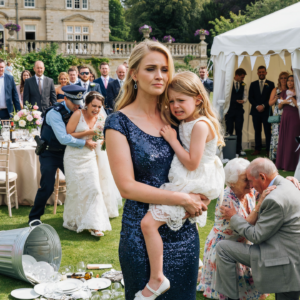
Chapter 1: The Vital Signs of Betrayal
The harsh, relentless hum of the fluorescent lights in Emergency Room Bay 4 drilled directly into my skull. The air smelled of iodine, bleach, and fear.
I am Maya. I am thirty-two years old, and for the last decade, I had been the Senior Financial Director for a massive, multi-national logistics firm. My life was defined by grueling eighty-hour workweeks, complex corporate portfolios, and a relentless, desperate need to be “useful.”
I was also battling a severe, chronic autoimmune disease. Stress was my primary trigger. And my family was the undisputed master of manufacturing catastrophic, life-draining stress.
My mother, Helen, was a woman whose entire existence revolved around projecting an image of old-money elitism to a suburban country club she couldn’t actually afford. My younger sister, Chloe, was her undisputed masterpiece—the golden child. Chloe was twenty-six, stunningly beautiful, perpetually unemployed, and entirely convinced that the universe, and my bank account, existed solely to fund her aesthetic.
Tonight, the stress had finally broken me. A massive, agonizing flare-up of my illness had hit me while I was alone in my apartment. The pain in my joints was so severe I had to crawl to the front door to unlock it for the paramedics.
Now, I lay shivering in a thin hospital gown, a thick IV drip steadily pumping high-dose steroids and painkillers into my bruised vein. I was terrified. I was entirely alone.
Desperate for a familiar voice, a sliver of maternal comfort, I reached for my phone resting on the small tray table beside the bed. I intended to text my mother, to tell her I had been admitted, hoping she might drive to the hospital to simply hold my hand.
I unlocked the screen.
Before I could open my messages, a push notification from my highly secure, corporate banking app overrode the display. The alert flashed in stark, bright red text, accompanied by a vibrating alarm.
CRITICAL ALERT: $250,000.00 WIRE TRANSFER SUCCESSFUL. STATUS: CLEARED.
My heart literally stopped beating. The monitor beside my bed let out a sharp, erratic spike.
That money was not mine. It was not my personal savings.
It was a highly secured, federally insured corporate escrow fund that I managed from my encrypted personal terminal—funds allocated for a pending real estate acquisition my firm was closing on Monday.
I frantically forced my trembling fingers to open the banking app, authenticating with my biometrics. I pulled up the transaction ledger.
The funds had been wired out exactly twenty minutes ago. The receiving account was listed clearly.
Recipient: Helen Vance. Memo: Wedding Venue & Catering Final Payment.
The air was violently sucked out of my lungs. The physical agony radiating through my joints was instantly, entirely eclipsed by a wave of pure, unadulterated, blinding psychological horror.
My mother had memorized my master password months ago when I had logged in from her home computer to help her pay a fraudulent tax bill. I had changed my personal passwords, but I hadn’t realized she had written down the secondary corporate key.
I scrambled to open my phone dialer, my hands shaking so violently I nearly dropped the device. I called my mother’s number.
It rang once. Then, it clicked straight to voicemail.
I pulled the phone away from my ear, gasping for breath, the panic rising like bile in my throat. A new text message popped up on the screen from Helen.
“Chloe needed the money for the venue and the caterers today or they were going to cancel the wedding. She deserves a perfect day. I know you have it in those big accounts. Don’t be dramatic, Maya. I’ll pay you back eventually. You’re just going to be sick and alone anyway. Stop ruining her joy. Have a good life.”
I stared at the words. Sick and alone.
And then, the ultimate, sickening confirmation of her sociopathy occurred. I tried to reply, to scream at her through the text that she had just stolen corporate funds.
The text bounced back. The contact name turned a dull, lifeless gray.
She had blocked me.
She had stolen a quarter of a million dollars while I lay in a hospital bed bleeding internally, justified it by mocking my chronic illness, and then permanently severed communication so I couldn’t “ruin” the aesthetic of her golden child’s wedding.
As the heart monitor beside my bed began to beep wildly, a rapid, frantic alarm signaling my spiking blood pressure, the weeping, desperate daughter inside me completely, irrevocably died.
I forced myself to close my eyes. I took a deep, shuddering, steadying breath.
The terror evaporated. The tears dried up instantly.
Because as my brilliant, analytical brain began to process the catastrophic reality of the situation, I realized that my mother hadn’t just stolen a wedding budget to buy orchids and champagne.
She had unwittingly, arrogantly stolen a highly monitored, federally protected corporate asset.
And she had left her digital fingerprints all over the murder weapon.
Chapter 2: The Grey Rock
“Ma’am? Your heart rate is dangerously high. Are you in pain?”
A young, concerned ER nurse rushed into the bay, her eyes darting between the erratic monitor and my pale face. She reached for a syringe, likely preparing to push a sedative into my IV line.
“I’m fine,” I said.
My voice didn’t shake. It was shockingly, terrifyingly calm. The high-pitched panic was entirely gone, replaced by a low, vibrating hum of pure, lethal, professional focus. I utilized the “grey rock” method internally, shedding all hysterical reaction, all familial grief, and locking my emotions inside a titanium vault.
I was no longer the scapegoated daughter, desperate for love. I was a Senior Financial Director whose corporate accounts had just been breached.
“I don’t need a sedative,” I told the nurse, pulling my posture straight against the pillows, ignoring the burning ache in my spine. “But I do need my laptop. It’s in the black leather tote bag you brought in with me. Please.”
The nurse hesitated, clearly confused by my sudden, eerie composure, but she obliged. She retrieved the heavy laptop and placed it on the rolling tray table over my lap.
“I’m going to need about two hours of absolute privacy,” I stated, booting up the machine. “Unless my vitals crash, do not interrupt me.”
For the next one hundred and twenty minutes, tethered to an IV pole in a cold hospital room, I executed a flawless, ruthless, and entirely unapologetic digital investigation.
I didn’t call the local police to beg for my money back. I didn’t send frantic, weeping emails to my sister or my enabling father. Providing them with a reaction would only feed their staggering narcissism. They expected me to be a victim. They expected me to cower.
I logged into my firm’s highly secure, encrypted mainframe.
My fingers flew across the keyboard with the speed of a seasoned operative. I pulled the exact, unalterable IP logs showing the transfer was initiated from my mother’s home computer in the suburbs. I pulled the time-stamped authentication codes proving she had used forged, unauthorized credentials to bypass the secondary corporate firewall.
I compiled the raw data, the bank wire receipts, and a screenshot of the horrific, mocking text message she had sent me confessing to the theft to fund Chloe’s wedding.
I packaged it into a single, highly encrypted dossier.
I didn’t send it to my mother.
I sent the dossier directly to my firm’s Chief Legal Counsel, the corporate compliance officer, and copied the specialized intake address for the FBI’s Financial Crimes and Wire Fraud Division in Chicago.
I attached a brief, clinical summary: Unauthorized breach of Corporate Escrow Account #8849. $250,000 stolen via identity theft and wire fraud. Suspect: Helen Vance. Funds are currently being actively dispersed to vendors at the Grand Marquis Country Club.
I hit send.
The digital bomb was armed, dropped, and currently plummeting toward their entire existence.
I picked up my phone. Out of a dark, morbid curiosity, I opened Instagram. I hadn’t been blocked there yet.
Chloe’s stories were at the top of my feed.
I tapped the glowing circle. There was my twenty-four-year-old sister, glowing with stolen wealth, twirling in a custom-made, fifteen-thousand-dollar white silk wedding gown during her final fitting. The next slide showed my mother, smiling haughtily, holding a crystal flute of champagne while reviewing massive, elaborate floral arrangements of imported white orchids.
Chloe had tagged the location: The Grand Marquis Country Club.
The caption read: “When your mom is an absolute queen and gives you the blank check wedding of your dreams! #Blessed #VanceWedding”
They were celebrating. They were practically radiating with the thrill of the heist. They truly believed they had won. They believed that because I was sick, because I was alone in a hospital bed, I was far too weak and too conditioned to ever fight back against “family.”
I locked my phone and set it face down on the tray table.
I closed my laptop, the screen going black.
I finally allowed my exhausted, battered body to sink back into the thin hospital mattress. The pain medication was finally taking the edge off my flare-up.
As I drifted off to sleep, a cold, terrifying, and profoundly peaceful smile touched my lips. I knew with absolute, unshakeable certainty that Saturday’s extravagant, quarter-of-a-million-dollar wedding wasn’t going to end with a romantic honeymoon in the Maldives.
It was going to end with a federal arraignment.
Chapter 3: The Stolen Orchids
By Saturday afternoon, I had been officially discharged from the hospital. The heavy dose of intravenous steroids had stabilized my flare-up, leaving me weak but entirely functional.
I didn’t go home to my apartment to rest. I didn’t put on sweatpants and cry.
I put on a sharp, tailored, dark charcoal business suit. I applied my makeup with meticulous precision, masking the pallor of my illness with the fierce, untouchable armor of a corporate executive.
I drove my car directly to the sprawling, impeccably manicured grounds of the Grand Marquis Country Club.
I didn’t park in the main guest lot. I drove to the massive, multi-level parking garage across the street, pulling my car into a dark spot on the third floor that offered a clear, unobstructed view of the country club’s grand entrance and the floor-to-ceiling windows of the main ballroom.
I turned off the engine, cracked the window slightly to let in the cool evening breeze, and waited.
It was 7:00 PM.
Inside the massive, brilliantly illuminated ballroom, the scene was a grotesque, opulent masterpiece of stolen wealth. From my vantage point, I could see the glow of the massive crystal chandeliers. I could see the towering, ridiculous centerpieces of white orchids and imported hydrangeas on every single table. I could see the sprawling, multi-tiered wedding cake and the open bar pouring vintage, top-shelf champagne.
My mother, Helen, was holding court near the head table. She was draped in an aggressively expensive, custom-beaded mother-of-the-bride gown, laughing loudly, actively bragging to the wealthy guests and the groom’s parents about the “blank check” she had provided for her golden child’s perfect day.
My father, David—the cowardly enabler who had always looked the other way when Helen emotionally abused me—was smoking a cigar on the patio with the groom, completely oblivious to the radioactive nature of the event he was attending.
And Chloe. Chloe was glowing. She was spinning on the massive, polished wooden dance floor in her stolen fifteen-thousand-dollar dress, preparing for her grand first dance with her new husband, a wealthy young junior partner at a law firm who had absolutely no idea he had just married into a family of federal criminals.
They looked like royalty. They felt untouchable.
I sat quietly in my car, resting my hands on the steering wheel, radiating an icy, lethal calm. The physical pain in my joints was a dull ache, completely muted by the sheer, adrenaline-fueled anticipation of absolute justice.
I checked my watch. 7:45 PM.
My phone buzzed on the passenger seat. It was a secure text message from Agent Miller, the lead investigator from the FBI’s financial crimes unit who had taken my case.
Target location confirmed. Funds traced to venue accounts. Units are in position. Awaiting your signal to execute.
I looked back at the ballroom windows. The DJ had just taken the microphone. I could faintly hear the muffled, booming voice through the glass. He was announcing the new couple. The lights in the ballroom dimmed perfectly. A single, dramatic spotlight illuminated the center of the dance floor. The romantic, swelling chords of a classic ballad began to play.
Chloe rested her head on her husband’s shoulder, smiling perfectly for the expensive videography team recording her every move.
I picked up my phone.
I typed a single word: Execute.
I hit send.
For ten agonizing, delicious seconds, nothing happened. The music played. The guests applauded politely.
And then, the heavy, imposing, brass-handled double doors of the grand ballroom didn’t just open. They burst inward with a violent, catastrophic force that had absolutely nothing to do with the catering staff.
Fifteen heavily armed federal agents, wearing dark tactical windbreakers with the bright yellow letters FBI emblazoned across their backs, swarmed into the room, moving with terrifying, synchronized precision.
Chapter 4: The Ballroom Raid
The romantic ballad abruptly, violently cut out with a harsh, ear-piercing screech of audio feedback.
“TURN THE MUSIC OFF! NOBODY LEAVES THIS ROOM!” a booming, authoritative voice echoed through the massive venue speakers.
An agent had marched directly to the DJ booth, physically pulling the plug on the sound system and snatching the microphone. The sudden, deafening silence that followed was apocalyptic.
On the dance floor, Chloe stopped mid-twirl. Her husband stumbled, looking around in utter confusion. The perfect, practiced smile on Chloe’s face melted instantly into a mask of sheer, unadulterated horror as the bright, harsh house lights of the ballroom were aggressively flipped on, banishing the romantic, dim ambiance.
The two hundred elite guests—doctors, lawyers, and high-society friends—gasped in collective shock, many standing up from their tables, their champagne flutes hovering near their mouths.
The lead agent, a tall, imposing man with eyes like flint, didn’t walk toward the bride. He marched with lethal, uncompromising purpose directly toward the head table.
Helen, my mother, was standing near her chair, her hands clutching her expensive pearl necklace. The smug, aristocratic arrogance was entirely gone. Her face had turned a blotchy, terrified, panic-stricken red.
“Helen Vance and David Vance?” the lead agent barked, his voice carrying clearly over the hushed, terrified crowd without needing a microphone.
My father, who had rushed back inside from the patio, froze near the dessert table, his cigar dropping from his fingers onto the polished wood floor.
“Yes?” Helen stammered, her voice a high-pitched, pathetic squeak. “What is the meaning of this? You are ruining my daughter’s wedding! Who is in charge here?!”
“I am,” the agent stated coldly. He reached to his tactical belt and pulled out a pair of heavy, steel handcuffs. The sharp clack-clack of the metal ratcheting open echoed in the silent room.
“Helen Vance, you are under arrest for grand larceny, identity theft, and multiple counts of federal wire fraud,” the agent recited loudly, ensuring every single guest in the room heard the charges perfectly.
“NO!” Helen shrieked, a horrific, guttural wail of pure terror. She physically recoiled, knocking over a crystal vase of orchids, sending water and flowers crashing onto the floor. “This is a mistake! My daughter authorized that transfer! She told me I could have the money! She’s mentally unwell, she’s sick, she must have forgotten! You have to call her!”
She was desperately, pathologically lying to the faces of federal agents, attempting to use my illness to save herself from prison.
The agent scoffed, an expression of profound disgust crossing his face. He grabbed her arm, roughly twisting it behind her back, entirely unimpressed by her designer gown.
“Your daughter didn’t authorize anything, ma’am,” the agent said, locking the steel cuffs tightly around her wrists. “And she certainly isn’t suffering from memory loss. She’s the one who handed us the IP logs, the forged authentication codes, and your text message confessing to the theft.”
Helen gasped, the air completely leaving her lungs as the reality of my retaliation hit her like a freight train.
“You didn’t steal a personal savings account, Mrs. Vance,” the agent continued, raising his voice so the groom’s parents could hear. “You stole a quarter of a million dollars from a federally insured corporate escrow account. You didn’t just rob your sick daughter; you robbed a Fortune 500 company. That makes this a federal jurisdiction.”
“Mom!” Chloe screamed, abandoning her husband on the dance floor and sprinting toward the head table, her massive silk skirt dragging heavily behind her. “Mom, what is he talking about?! The wedding is paid for!”
A second agent, holding a thick clipboard, stepped forward to intercept the hysterical bride.
“Actually, ma’am, it isn’t,” the second agent informed Chloe, his voice entirely devoid of pity. He turned to the pale, sweating General Manager of the country club, who had rushed into the room. “Sir, the two hundred and fifty thousand dollar wire transfer used to secure this venue and the catering has been officially seized by the federal government as evidence of a crime. The funds have been frozen and will be clawed back to the corporation tomorrow morning. Which means this entire event is currently unpaid for.”
The General Manager’s eyes widened in sheer horror. He immediately turned to his staff. “Cut the bar! Nobody touches the food! Stop serving immediately!”
The ballroom descended into absolute, unprecedented chaos.
Guests began grabbing their coats and rushing toward the exits, desperate to flee the radioactive fallout of a federal raid. The groom, a junior lawyer who understood exactly what “federal wire fraud” meant for his own career and reputation, took three massive, deliberate steps away from Chloe. He looked at his new bride, and the weeping, handcuffed mother-in-law, with pure, unadulterated, irredeemable disgust.
He didn’t stay to comfort her. He turned on his heel and walked rapidly out the front doors, followed closely by his horrified parents.
From my vantage point in the dark parking garage across the street, I watched the spectacular, catastrophic implosion of the Vance family through the massive glass windows.
I watched as my mother, weeping hysterically and screaming my name in fury, was frog-marched out of the country club by two armed agents and shoved roughly into the back of a police SUV. I watched my father being handcuffed for conspiracy, his head hung in total, pathetic defeat. I watched Chloe collapse onto the floor in her fifteen-thousand-dollar dress, entirely abandoned, her “perfect day” reduced to a viral, criminal spectacle.
I didn’t roll down the window to gloat. I didn’t want them to see my face.
I simply started the engine of my car, put it in drive, and quietly, peacefully drove away from the wreckage, entirely untouched by the flames.
Chapter 5: The Corporate Ascension
Six months later, the universe had aggressively, flawlessly balanced the scales.
The contrast between the catastrophic, smoldering ruins of my family’s fake empire and the soaring, peaceful reality of my own life was absolute.
In a harsh, fluorescent-lit, wood-paneled federal courtroom downtown, the final act of Helen and David’s destruction played out. Faced with the irrefutable digital evidence of the IP logs, the bank wire receipts, and the catastrophic, mocking text message Helen had sent me while I was in the ER, their high-priced defense attorney had strongly advised them to take a plea deal. They didn’t stand a chance in front of a jury.
Helen sat at the defense table. She was no longer the arrogant, status-obsessed matriarch dripping in stolen wealth. She was wearing a drab, faded, shapeless orange federal prison jumpsuit. Her expensive highlights had grown out, her face was gaunt, and she looked utterly, completely broken.
She wept loudly, uncontrollably, as the federal judge sternly denied her pathetic, weeping plea for leniency. The judge cited the sociopathic, predatory nature of stealing from a hospitalized, chronically ill family member to fund a luxury party.
Helen was sentenced to eight years in a federal penitentiary for grand larceny and wire fraud.
My father, David, having fully cooperated and proven he didn’t initiate the transfer, still faced massive consequences for his complicity and enjoyment of the stolen funds. He was bankrupted by the legal fees and ordered to pay massive restitution fines. The sprawling family home was foreclosed upon by the bank.
Chloe’s fairy-tale life had imploded with spectacular, humiliating speed.
Her marriage was immediately annulled by the groom’s wealthy family, who wanted absolutely nothing to do with the criminal scandal. Because she had signed the secondary contracts for the wedding venue and the exorbitant floral arrangements, she was held civilly liable for the massive, unpaid debt when the stolen $250,000 was clawed back.
She was forced into personal bankruptcy. She sat in the courtroom gallery, wearing cheap clothes, her reputation in her high-society circles completely annihilated. She was a pariah, a laughingstock, forced to work a grueling retail job just to survive, finally experiencing the harsh, unforgiving reality of the world she had so eagerly mocked.
Miles away from their misery, the atmosphere was entirely, wonderfully different.
Brilliant, warm morning sunlight streamed through the massive, floor-to-ceiling windows of my newly acquired, spacious corner office on the fortieth floor of the corporate headquarters.
The $250,000 had been swiftly, legally recovered by the FBI and returned in full to my company’s escrow account. The IPO had launched flawlessly.
My CEO, profoundly impressed by my chilling, uncompromising integrity, my ability to separate emotion from duty, and my meticulous handling of a massive internal crisis while hospitalized, had not fired me.
He had promoted me.
I was now the Chief Financial Officer of the entire corporation.
I sat behind my sleek, expansive glass desk, wearing a flawless, bespoke designer suit. I was entirely untouchable. My health was thriving; the severe, agonizing flare-ups of my autoimmune disease had diminished significantly, almost miraculously, once the crushing, toxic, parasitic weight of my mother’s emotional abuse had been permanently severed from my life.
There were no frantic phone calls demanding money. There were no guilt trips. There were no cruel, passive-aggressive text messages telling me I was going to die alone.
There was only the immense, empowering, beautiful weightlessness of absolute safety, and a career built entirely on my own brilliance and unyielding strength.
I picked up a heavy gold pen and signed the final approval on a multi-million-dollar corporate merger, completely, blissfully unbothered by the fact that earlier that morning, a pathetic, multi-page, tear-stained begging letter from my sister had arrived in the mail, asking for a loan to help her avoid eviction.
It was a letter I had immediately, without reading a single word, dropped directly into the heavy-duty industrial paper shredder beneath my desk.
Chapter 6: The True Cure
Exactly one year later.
It was a vibrant, brilliantly warm, and unimaginably beautiful Saturday evening in late May. The sky over the Chicago skyline was painted in breathtaking, cinematic strokes of violet, amber, and gold as the sun began to set.
I was thirty-one years old, and my life was a fully actualized, joyful triumph.
I was not sitting in a sterile, freezing emergency room bed attached to an IV drip.
I was hosting a lavish, elegant, and incredibly loud dinner party on the expansive rooftop terrace of my own sprawling penthouse apartment. The air was filled with the smell of catered food, the clinking of crystal glasses, and the genuine, uninhibited laughter of my chosen family.
I was surrounded by close friends, brilliant colleagues, and a supportive, loving partner I had met six months ago, who respected my mind, valued my presence, and brought true, uncomplicated joy to my life.
My illness was in complete, sustained remission.
I stood near the glass railing of the terrace, holding a delicate flute of vintage champagne. The evening breeze ruffled my hair. I looked out over the glittering, endless expanse of the city lights below me.
For a brief, fleeting moment, my mind drifted back exactly one year.
I remembered the harsh fluorescent lights of the ER. I remembered the agonizing pain in my joints. And I remembered staring at my phone, reading that cold, cruel, sociopathic text message from my mother.
You’re just going to be sick and alone anyway.
They had thought they were delivering a death sentence. They genuinely believed that by stealing my resources and abandoning me in a hospital, they would break my spirit, leaving me a pathetic, weeping victim entirely dependent on their conditional, toxic scraps of affection.
They were entirely, blissfully unaware that they were simply handing me the scalpel I needed to permanently, legally excise the cancer from my life.
I smiled, a fierce, radiant, and deeply peaceful expression illuminating my face in the fading sunlight.
My mother had been wrong about absolutely everything.
I wasn’t sick. And I certainly wasn’t alone.
I had spent thirty years of my life trying to buy the love of a family that only ever saw me as a disposable bank account. I had poured my energy, my money, and my health into a bottomless pit of their entitlement, entirely unaware that the moment they robbed me, the moment they showed me exactly who they were, was the greatest, most profound gift they could have ever given me.
“To Maya!” my partner called out from the head of the table, raising his glass high into the warm evening air, his eyes filled with genuine love and respect. “To health, and to the strongest woman I know!”
“To Maya!” the crowd of my friends echoed, raising their glasses in unison, the sound of their joyous voices filling the beautiful night.
I raised my crystal champagne flute high to the starlit sky.
I left the dark, pathetic ghosts of my bloodline permanently locked in their own self-made, miserable prisons of consequence. I turned my back on the edge of the terrace, took a long, satisfying sip of the champagne, and stepped fearlessly, brilliantly, and unapologetically into the bright, limitless, self-made future that I had built entirely, and exclusively, for myself.